TB disease
TB disease can attack anyone (old, young, men, women, poor, or rich) and wherever. Each year, Indonesia is the fourth million new TB cases and approximately 140,000 deaths occur each year are caused by TB. In fact, Indonesia is the third largest country with a TB problem in the world.
TB prevalence surveys conducted in six provinces in the years 1983-1993 shows that the prevalence of TB in India ranges between 0.2 - 0.65%. Meanwhile, according to a report of the Global TB issued by the WHO in 2004, the TB incidence in 2002 reached 555,000 cases (256 case/100.000 population), and 46% among new cases is estimated.
The cause of TB disease
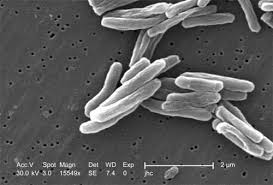
TB disease is an infection disease caused by bacteria Mikobakterium tuberkulosa. This rod-shaped bacteria and acid-resistant so it is also known as Trunk Hold acid (BTA). The bacteria was first discovered by Robert Koch on 24 March 1882, for the services so that the bacteria is given the name of Koch bacillus. In fact, TB disease in the lungs sometimes referred to as the Koch Pulmonum (KP).
Ways of TB disease
TB disease usually spread through the air contamination with bacteria Mikobakterium tuberkulosa released at the time of the TB sufferer coughs, and children on the source of infection is generally derived from adult TB patients. This is often when bacteria enter and collect in the lungs will breed a lot (especially on the body's resistance with a low), and can spread through the blood vessel or lymph gland. That's why it's an infection of TB infection can almost all organs such as lung, brain, kidney, alimentary tract, bone, lymph gland, and others, but the organs most often affected is the lungs.
When Mikobakterium tuberkulosa successful infection of the lungs, it will immediately grow the bacteria colony forming globular (rounded). Usually through a series of reactions imunologis TB bacteria will try this in the resistor through the wall around the bacteria cells by tuberculosis. Mechanism for the formation of the walls that create a network in a network surrounding scar and TB bacteria becomes dormant (resting). Dormant forms of this is seen as the actual examination tuberkel on the image rays.
On some people with good immune system, this form will remain dormant throughout his life. Whereas in those with immune systems that are less, the bacteria will experience Maintenance tuberkel increased so much. Tuberkel of this form a lot of space in the lungs. This space will become a source of production of sputum (phlegm). Someone who has been producing sputum can be estimated are experiencing growth in excess tuberkel positive and infected with TB.
The increasing spread of infection has been reported at this time, many linked to several conditions, including social conditions worsen its economy, has not been optimal public health service facilities, increasing the number of people who do not have a place to stay and the epidemic of HIV infection. Besides, the resistance of the body is weak / decrease, virulensi and the number of bacteria is a factor that play an important role in the occurrence of TB infection.
Symptoms of TB disease
Symptoms of TB disease can be divided into general symptoms and specific symptoms that arise according to the organ involved. Clinical picture is not very typical, especially in the case of new, so quite difficult to enforce the diagnostic clinic.
Symptoms of systemic / general
• Fever is not so high that lasts a long time, usually felt at night with night
sweat. Sometimes the attacks, such as fever and influenza are missing arise.
• A decrease in appetite and body weight.
• Coughing, coughing for more than 3 hours (can be accompanied by blood).
• The do not feel (malaise), weakness.
Specific symptom
• Depending on the organ which is exposed to, in the case of a partial gag bronkus
(channel leading to the lungs) due to the emphasis lymph gland that up, will vote
"mengi", the voice that comes out of breath shortness.
• If there are liquids dirongga pleura (wrapping the lungs), can be accompanied with
chest pain complaints.
• When the bones, the symptoms will occur such as infection of the bone at a time can
form a channel and empty on the skin above it, at the mouth of the exit liquid pus.
• In children the brain (layer wrapping the brain) and referred to as meningitis
(brain peritonitis), the symptoms are high fever, a decrease in awareness,
convulsions and cramps.
In the patient who does not cause the child symptoms, TB can be detected if there is contact with adult TB patients. Approximately 30-50% of children in contact with adult tuberculosis patients TB test results tuberkulin positive. At the age of the child 3 months - 5 years of living the same house with people with TB tuberculosis with BTA positive adults, 30% reported being infected based on serologi / blood.
HOW TRADITIONAL Overcoming tuberculosis (TUBER CULOSE)
TB disease is a disease infection in the lungs, the disease caused by germs tubercelli dangerous, because if do not get help can threaten lives. Germs that are on the inflammation can spread tuberculosis to other people through the breath / air. TB disease / inflammation tuberculosis should get help from doctors and lungs to be mondok sanatorium, when the situation is quite severe. Things that need to be patient: that people often have to bask in the hot morning sun to get ultraviolet rays that can kill germs tubercolose, and place must be quite high and the fresh tube. Every day to train and suck the breath out slowly and regularly organized.
The traditional ingredients required: pegagan 10 grams of leaves, leaf waru lengis 10 grams, 25 grams widoro policeman, leaves legundi 10 grams, 5 grams grated kencur. All material filtered boiled water, then drink.
Other ingredients: 15 grams pegagan leaves, leaves waru lengis 10 grams, pupus leaves legundi 15 grams, 10 grams upas widoro, kencur 5 grams, beans pronojiwo in tumbuk 5 grams. All material on tumbuk then boiled and filtered water to drink.
Continue...
Saturday, 7 March 2009

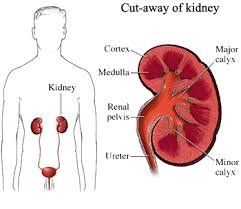
Stone kidney
Kidney stones are small stones that form in the kidneys and move down in the pipe e urine (ureter).
These stones which cause pain at the puncture back down, channel urine or stomach underneath.
In the bladder, stones can clog channels urine (urethra) and the small void that is difficult and painful exit.
Composition of kidney stones:
1. calcium
2. oxalate
3. phosphate
Causes:
1. Drink less so that the body's metabolic system is not running optimally. Fluid
needed to take a variety of poisons in the body is not sufficient. This resulted
in the urin experience so that condensation forms, such as grain stone.
2. The body produces acid strand in the blood is too excessive
3. Infections that occur in the kidneys form kidney stones ease.
4. Genetic factors. If found one family member suffering from kidney stones, is
almost possible to seed the same potential.
Foods that should be avoided for people with kidney stones:
1. Rhubarb
2. Spinach
3. Soybean Crackers
4. Beans
5. Brown
6. Sweet potatoes
Fruits that contain oxalate in the medium size, but that can be consumed with the appropriate measure:
1. Wine
2. Celery
3. Gtits
4. Green pepper
5. Raspbery red
6. Fruit cake
7. Strawberry
8. Marmalade
9. Liver
Facts about kidney stones:
1. Scientists find a kidney stone on the mummy of Egypt's oldest aged 7000 years.
2. According to the medical record, as many as three million patients have complaints
on the kidneys, and half a million into its emergency room because it detected a
kidney stone.
3. Most kidney stones will come out by itself without the intervention of the
medical. This is the normal scale. But if the disease is severe, required more
handling by doing surgery.
4. From the survey, the Caucasus has more potential kidney stone disease compared to
the Afro-American.
5. Usually men will experience kidney stones at the age of 40 years and increases
dramatically when the reach the age of 70 years. Meanwhile, women around the age
of 50 years.
Signs:
1. The first complaint that is felt very sharp pain, or severe on the lower back,
waist or the bottom of the stomach, or specifically the male sex organ in the base.
2. Sometimes the urine channel stopped so difficult to dispose of urine, or can not
do at all. Blood will out when people began to move small
3. Urinary system infections may occur simultaneously.
Action:
1. Drink lots of water.
2. If the patient does not improve the drinking water or if he has fever, he must
take pills sulfonamid, ampicillin, or tetracycline. Note carefully about its
dosage and warnings.
3. Also give aspirin or paregoric and other antispasmodik
4. Try urinating in a lie. This sometimes makes a stone in the urine matrix scrolling
back and release the cork on a hole for the mouth of the channel urine
5. In the case of heavy, ask for the help of a doctor. Sometimes surgery is needed
(surgery).
Medicine
Small stones that do not cause symptoms, or stoppage of infection, usually does not need treated. Drinking lots of fluids will increase the formation of urine and water to help remove some of the stone; if the stone was removed, so do not need treatment immediately. Kolik renalis be reduced by the sedative drug. Stone in the pelvis the ureter or renalis the top of the measuring 1 centimeter or less can often be solved by ultrasonic waves (extracorporeal shock wave lithotripsy, ESWL). Fraction of stone will be removed in the urine of water. Sometimes a stone was through a small slice in the skin (percutaneous nephrolithotomy, nefrolitotomi perkutaneus), followed by ultrasonic treatment. Small stones in the lower part of the ureter can be lifted with the endoscope is inserted through uretra and into the bladder. Stone sour nerves sometimes will gradually dissolve in the water environment of urine basa (for example by giving potassium citric), but other stones can not be solved this way. Stone sour greater muscle, which caused the stoppage, should be appointed through the surgery. There is a stone struvit indicate the occurrence of channel urine infection, so antibiotics are given.
Continue...